
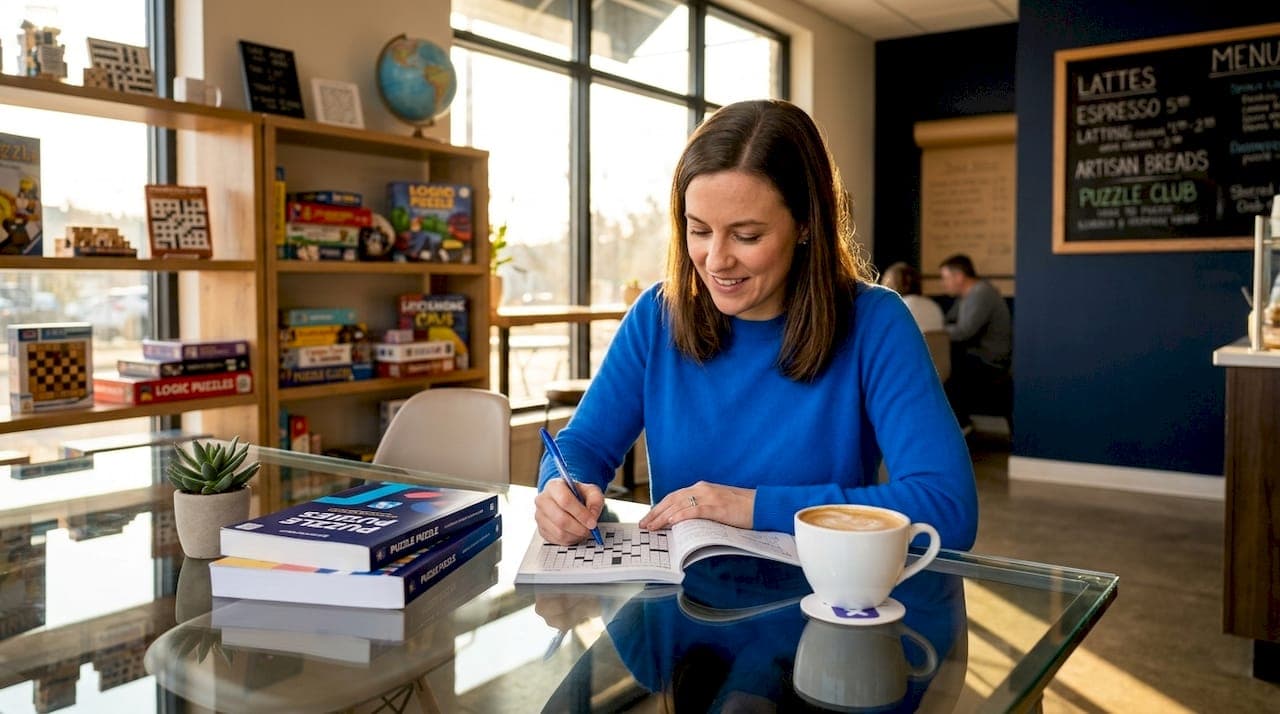
Crossword books have quietly become one of the most compelling leisure purchases for adults across every age group. Understanding how crossword books attract adult readers means looking past the stereotype of the retired grandparent with a newspaper. Today, 50% of adults aged 18 to 29 regularly solve crossword puzzles, making Gen Z the most active crossword generation. The appeal runs deeper than a casual hobby. These books deliver cognitive benefits, social connection, and a satisfying print experience that no app fully replicates.
Table of Contents
- Key Takeaways
- How crossword books attract adult readers across demographics
- What makes crossword book design so satisfying
- Social dynamics that fuel crossword book popularity
- How digital puzzle success drives print book sales
- How to get started and stay engaged with crossword books
- My take on why print crossword books still matter
- Create your own crossword books with Puzzlemaker
- FAQ
Key Takeaways
| Point | Details |
|---|---|
| Gen Z drives crossword growth | Adults under 30 now lead crossword participation, making these books relevant across all age groups. |
| Print beats digital for closure | Physical puzzle books offer a bounded, self-contained challenge that creates genuine satisfaction when completed. |
| Cognitive benefits are proven | Mental engagement through crosswords slows cognitive decline in older adults more effectively than physical exercise. |
| Social solving builds community | Crossword clubs and group solving sessions make puzzle books a shared social activity, not just a solo one. |
| Digital popularity fuels print sales | Massive online puzzle audiences actively convert into physical book buyers when publishers market the connection well. |
How crossword books attract adult readers across demographics
The crossword puzzle is often treated as a niche interest, but the data tells a different story. Adults from their 20s to their 80s are picking up crossword books in growing numbers, and the reasons vary significantly by age group.
For younger adults, the appeal connects to pattern recognition, wordplay, and the satisfaction of a mental challenge that fits inside a lunch break. Gen Z participation in crossword solving is now higher than any other generation, which directly contradicts the assumption that these books only serve older readers.
For adults over 65, the motivation often runs deeper. A longitudinal study tracking 20,000 Americans over a decade found that frequent mental engagement, including crossword solving, was the strongest predictor of slower cognitive decline. That result held up even when compared to physical exercise. The implication is significant: picking up a crossword book is not just entertainment. It is one of the most practical things an older adult can do for long-term brain health.
Here is what makes crossword books specifically appealing to the broad adult audience:
- Accessible entry points. You do not need a college degree or specialized knowledge to start. Pattern recognition and flexible entry mean any adult can find a foothold in a well-designed puzzle.
- Scalable difficulty. Books organized by difficulty level let you start easy and build confidence before moving to harder grids.
- Screen-free mental exercise. Adults increasingly want activities that give their eyes and attention a break from screens.
- Portable and self-contained. A crossword book fits in a bag, works without Wi-Fi, and requires nothing except a pen.
The cognitive benefits of crossword puzzles are not limited to older adults either. Younger solvers report improved vocabulary, faster recall, and a stronger sense of focus after regular solving sessions. The purpose of crossword books extends well beyond entertainment. They function as low-cost, high-return cognitive tools.
What makes crossword book design so satisfying
The design of a crossword book matters more than most readers realize. A poorly constructed puzzle frustrates you and kills the habit. A well-built one pulls you back every day.
The key concept here is designed solvability. Puzzle constructors engineer their grids so that you feel genuinely stuck at a certain point, then find a clear path forward. That moment of breakthrough, the so-called "aha" experience, is not accidental. It is built into the structure of the puzzle intentionally. Constructors who prioritize this experience over showing off obscure vocabulary create puzzles that adults return to repeatedly.
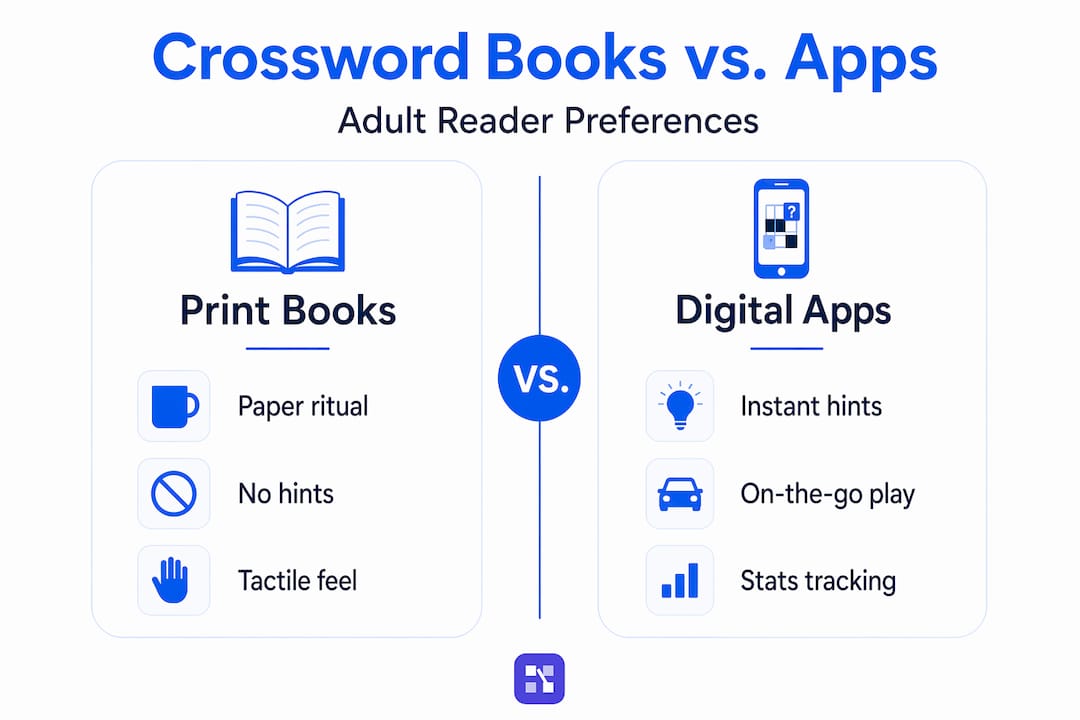
Print books also avoid a specific trap that digital formats fall into: the hint button. When you solve on paper, the challenge stays winnable without shortcuts. This forces constructors to keep difficulty balanced and approachable. The result is a more honest and rewarding solving experience.
Pro Tip: When choosing a crossword book, flip to the middle section first. If the clues feel just slightly out of reach but not impossible, the difficulty calibration is right for sustained engagement.
Here is how print and digital crossword experiences compare:
| Feature | Print crossword books | Digital crossword apps |
|---|---|---|
| Hint availability | None, relies on solver skill | Usually available on demand |
| Sense of completion | Physical, permanent, satisfying | Temporary, screen-based |
| Portability | No battery required | Requires charged device |
| Difficulty control | Set by book design | Often adjustable mid-puzzle |
| Habit formation | Strong, tied to physical ritual | Variable, easily interrupted |
Print puzzles also provide what researchers call a bounded challenge. You know where the puzzle starts and ends. That predictability is part of why adults use crossword books as habit containers, slotting them into morning routines, commutes, or wind-down rituals. The closure you feel when you fill in the last square is a real psychological reward, and it keeps you coming back.
Social dynamics that fuel crossword book popularity
Crossword solving has a reputation as a solitary activity. That reputation is increasingly outdated. One of the most overlooked reasons for crossword book popularity is the social layer that has grown around it.
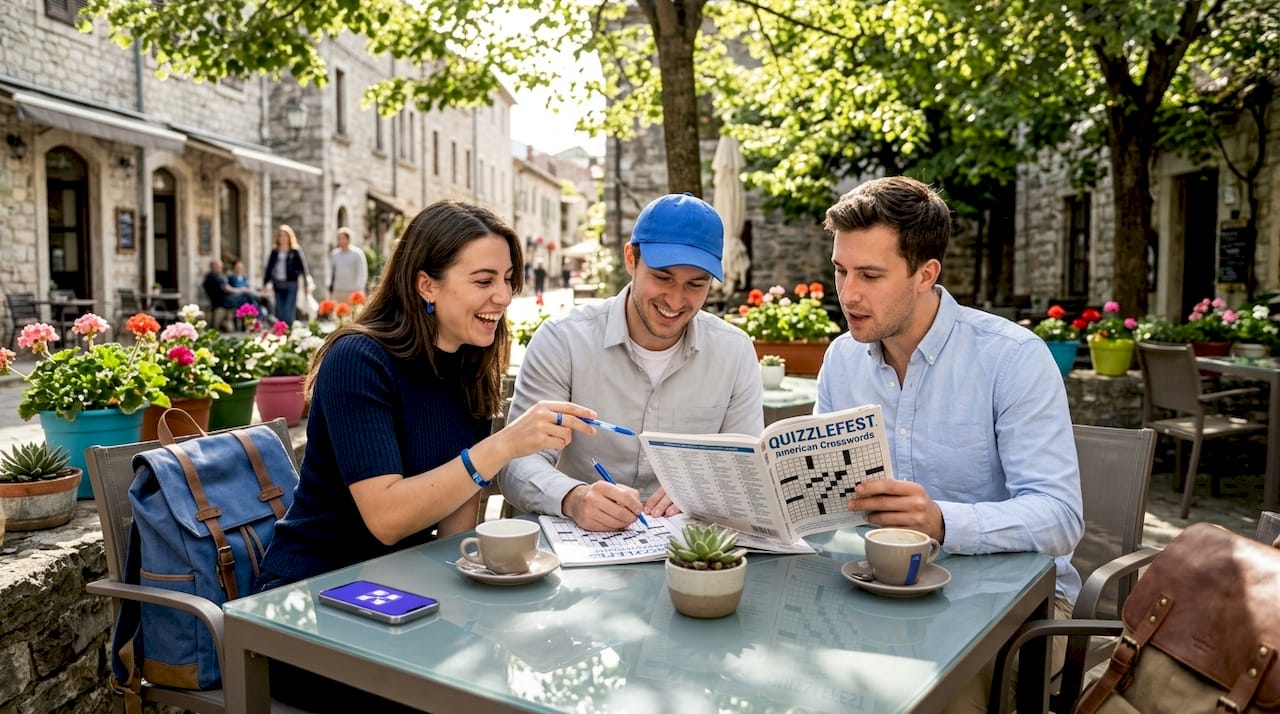
Crossword clubs and group solving sessions have become a genuine community feature, both in person and online. Families solve together over Zoom. Friends compete on the same puzzle from separate cities. Libraries host crossword nights. These shared experiences turn a personal book into a social object.
Intergenerational solving is particularly worth noting. A grandparent and a college student working through the same crossword book creates a rare kind of shared focus. The puzzle provides a neutral, engaging topic that crosses generational gaps without requiring common cultural references.
The community aspect also extends to puzzle creation. Adult crossword growth is increasingly driven by communities where beginners and experienced constructors interact, share grids, and teach each other. When someone learns to construct a puzzle, their appreciation for solving deepens significantly.
- Crossword clubs meet weekly in libraries, coffee shops, and community centers across the country.
- Online forums let solvers discuss specific clues, compare solving times, and recommend books to each other.
- Puzzle creation communities welcome adults with no prior experience and teach construction from scratch.
- Group solving reduces the intimidation factor for beginners, making the first book feel approachable rather than isolating.
This social infrastructure is a direct driver of book sales. When a crossword club recommends a specific title, that recommendation carries weight. Publishers who understand this invest in community outreach, not just shelf placement.
How digital puzzle success drives print book sales
The relationship between digital crossword games and physical book sales is more direct than publishers initially expected. NYT Games were played 11 billion times in 2024. That number represents an enormous pool of adults who are already engaged with puzzle solving and actively looking for the next format to try.
Barnes and Noble recognized this and partnered with the New York Times to release exclusive print editions of Connections, one of the most viral puzzle games in recent memory. The books were marketed directly as the next obsession for puzzle lovers, a pitch that worked precisely because the audience already existed.
| Digital puzzle metric | What it means for print books |
|---|---|
| 11 billion NYT Games plays in 2024 | Massive proven audience ready for physical formats |
| Viral game mechanics (Connections, Wordle) | Adults want variety and collectible formats, not just apps |
| Daily habit formation in digital play | Transfers naturally to daily crossword book routines |
| Social sharing of digital puzzle results | Creates word-of-mouth demand for related print products |
The print puzzle market is smart to position books as companions to digital play, not competitors. An adult who solves Wordle every morning is already primed for a crossword book. The tactile format, the permanence, and the absence of notifications make the book feel like an upgrade rather than a step backward.
How to get started and stay engaged with crossword books
If you are new to crossword books or trying to build a consistent habit, the approach matters as much as the book you choose.
- Start with a themed book. Themed crosswords, focused on topics like movies, history, or food, give you built-in context clues that make early solving more manageable and more fun.
- Pick the right difficulty level. Most crossword books label difficulty clearly. Start one level below where you think you belong. Early wins build the habit.
- Set a time, not a goal. Solve for 15 minutes daily rather than trying to finish a puzzle in one sitting. This builds a sustainable routine without pressure.
- Join a group. Find a local crossword club or an online community. Discussing clues with others accelerates your improvement and makes the experience more enjoyable.
- Learn from your mistakes. When you finish a puzzle and check answers, spend 60 seconds on the clues you missed. That review is where vocabulary and pattern recognition actually grow.
You can also explore crossword tips and tricks to sharpen your solving skills faster. For those who want to go further, advanced crossword strategies cover techniques that experienced solvers use to tackle harder grids.
Pro Tip: Keep a dedicated pen in your crossword book. The physical ritual of uncapping the same pen each time you sit down signals your brain that it is time to focus, making it easier to get into the solving mindset quickly.
My take on why print crossword books still matter
I have spent years watching the puzzle world evolve, and the one thing that surprises people most is how durable the print format has turned out to be. Everyone assumed apps would kill the crossword book. They did not.
What I have learned is that the satisfaction of filling in a grid by hand is genuinely different from tapping a screen. There is a permanence to it. When you close a finished crossword book, you have a physical record of the time you spent. That matters to people more than most publishers realize.
The cognitive case is strong, and the social case is growing. But the emotional case is what I find most compelling. Adults are looking for activities that feel complete. A crossword book delivers that in a way that a notification-driven app simply cannot. You finish it. You put it down. You feel good.
The community angle is also underappreciated. I have seen people form lasting friendships through crossword clubs who never would have connected otherwise. That is not a small thing. It is a real and growing part of why these books continue to sell.
My honest opinion: if you have not picked up a crossword book in the last year, you are missing one of the few leisure activities that genuinely pays you back in mental clarity and quiet satisfaction.
— Dylan
Create your own crossword books with Puzzlemaker
If reading this has made you want to go beyond solving and start creating, Puzzlemaker gives you everything you need to build your own crossword books from scratch.
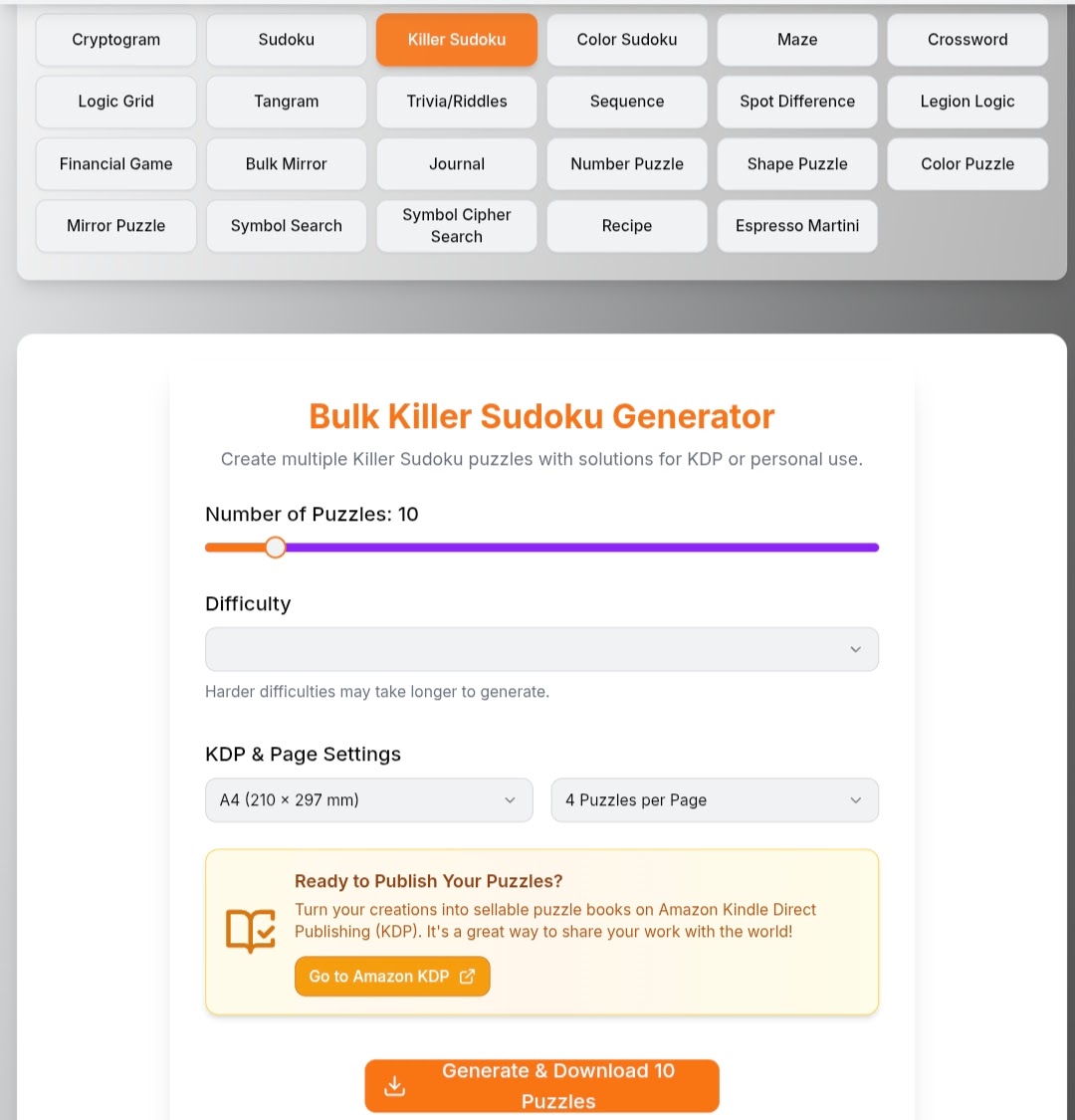
With Puzzlemaker's custom puzzle maker, you can design crossword grids around any theme, control difficulty, and export print-ready PDFs instantly. No login required. The multi-page puzzle book generator lets you compile multiple puzzles into a single formatted book, ready for personal use, gifting, or commercial sale on platforms like Etsy or KDP. Whether you want to build a puzzle book for a crossword club, create a themed gift, or launch a puzzle product, Puzzlemaker handles the formatting so you can focus on the content.
FAQ
Why do adults prefer crossword books over digital apps?
Print crossword books offer a bounded, screen-free challenge with a clear sense of completion that apps do not fully replicate. The physical format supports habit formation and delivers a stronger sense of satisfaction when you finish a puzzle.
What are the cognitive benefits of crossword puzzles for adults?
Regular crossword solving is linked to slower cognitive decline in adults over 65, with one study of 20,000 participants finding mental engagement more protective than physical exercise. Younger adults also report improved vocabulary and focus.
Are crossword books popular with younger adults?
Yes. Adults aged 18 to 29 now lead crossword participation among all age groups, making crossword books relevant and appealing well beyond older generations.
How do I choose the right crossword book?
Look for books with clearly labeled difficulty levels, themed content that interests you, and clues that avoid obscure vocabulary. Starting one difficulty level below your estimate builds confidence and keeps the habit going.
How does digital crossword popularity affect print book sales?
Digital puzzle platforms with billions of plays create a ready-made audience for print books. Publishers who market physical editions as a natural next step for digital fans see strong crossover sales, as the Barnes and Noble and New York Times partnership demonstrates.